
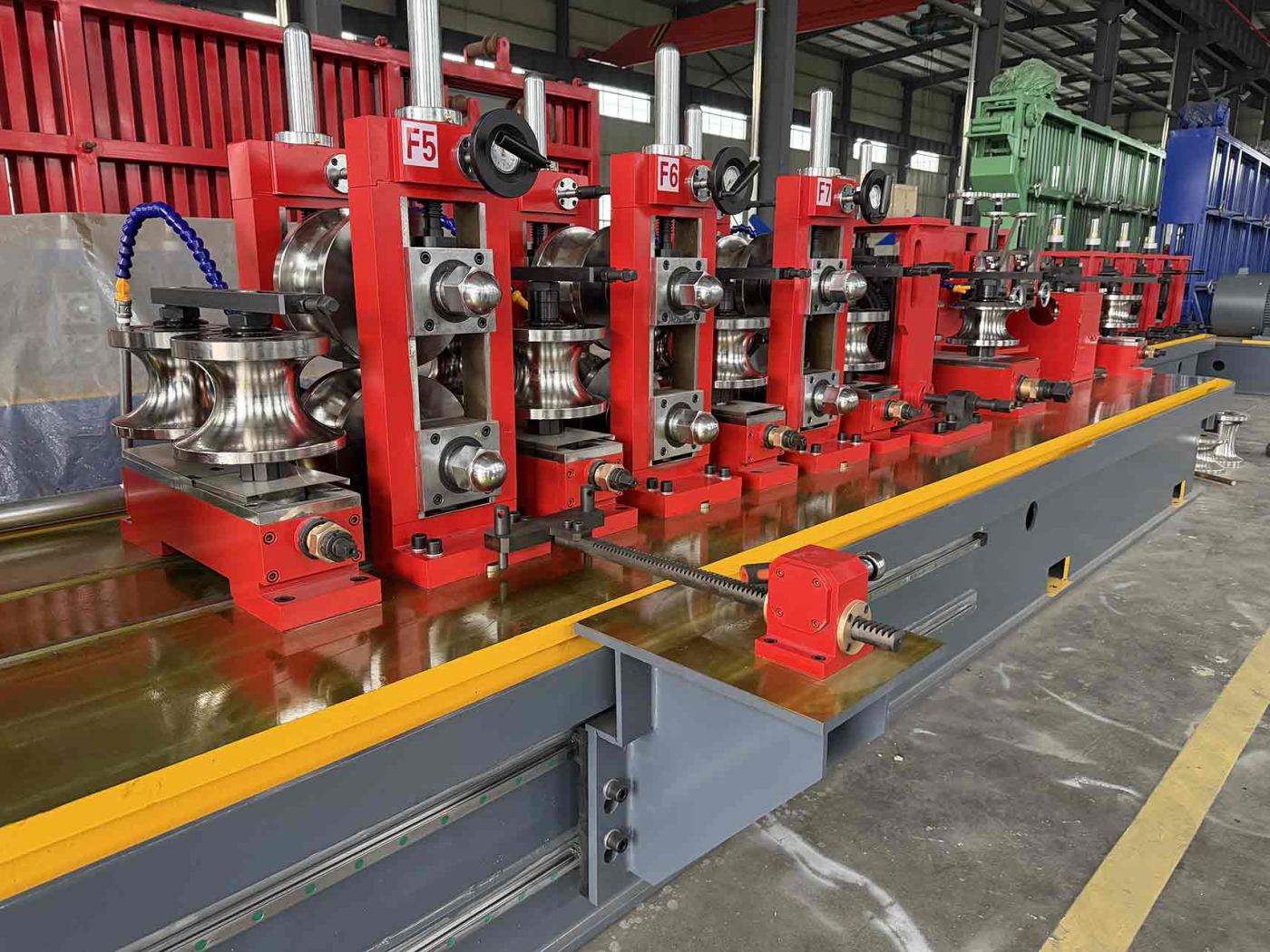
Roll Forming Machine
However, LOTOSFORMING is a professional ▷▷ Roll Forming Machine – Best Manufacturer 2026 in China. hence, LOTOSFORMING offers an extensive range of roll forming machines, catering to various industries and needs. They cover a wide spectrum of manufacturing requirements, from purlins to sheet panels, and even portable roll forming machines.
It’s interesting to note their focus on innovation and customization, evident in their ability to design and produce small roll forming machines for users with limited space and portable metal roof roll forming machines for on-site panel production.
Therefore, Their commitment to being at the forefront of the roll forming industry in China suggests a dedication to quality and reliability in their products. It’s intriguing to see how they continue to evolve and shape the future of roll forming technology.
LOTOSFORMING is a prominent roll forming machine manufacturer based in China. They specialize in designing and producing various types of roll forming machines for a wide range of industries and applications. LOTOSFORMING is known for its commitment to innovation, quality, and customization to meet the specific needs of their clients.
Roll Forming Machines & System
At LOTOSFORMING, we specialize in providing advanced roll forming machines, design to meet the highest standards of precision and customization. First and foremost, our machines are meticulously engineered to ensure exceptional performance, reliability, and efficiency in every production run.
To begin with, you will work closely with our expert team to design a machine that perfectly aligns with your shape, size, and material requirements. Moreover, we prioritize your specific production needs to deliver a customized solution that exceeds expectations.
In addition, you can leverage our cutting-edge technology, which guarantees consistent, high quality output, ensuring every product meets your exacting standards. Furthermore, you’ll benefit from our ongoing investments in research and development, which continuously improve our machines’ efficiency and productivity, keeping you ahead of the competition.
What’s more, our machines are built to endure the most demanding industrial environments, providing long-term reliability and minimizing downtime. Equally important, we offer a complete support package, including installation, training, maintenance, and troubleshooting services, to ensure your machine operates at peak performance throughout its lifespan.
In summary, experience the unmatche quality and reliability of LOTOSFORMING’s roll forming machines, tailored to deliver excellence in every aspect of your production
Roll Forming Machine Manufacturer
LOTOSFORMING leads the industry by providing roll forming machines tailored to each client’s specific needs. Our team works closely with customers to understand their unique requirements, ensuring every machine matches the exact shape, size, and material specifications for their production demands.
With a strong focus on precision engineering, our skilled engineers and technicians utilize state-of-the-art design and manufacturing processes to produce machines that consistently deliver high-quality output. This dedication to precision ensures reliability and accuracy in every production phase.
In addition to customization and precision, LOTOSFORMING is committed to innovation and durability. To stay at the cutting edge of roll forming technology, we invest heavily in research and development, continually adding new features to improve efficiency, productivity, and user experience.
Our machines are built from robust materials to endure the harshest industrial environments, ensuring long-term reliability and performance. To further support our customers, we offer comprehensive after-sales services, including installation, training, maintenance, and troubleshooting. This ensures our clients enjoy optimal machine performance and satisfaction throughout the machine’s lifecycle.


Roll Forming Applications
Electrical Industry
- Cable Trays and Conduits: Furthermore, roll forming crucial in producing cable trays, conduits, and raceways use in electrical installations. These products must be precise and uniform to safely support and protect electrical wiring. The ability to produce long, continuous sections with consistent quality makes roll forming ideal for these applications.
- Enclosures and Panels: Moreover, electrical enclosures, switchgear cabinets, and control panels are often made using roll forming. These components need to be strong, corrosion-resistant, and sometimes custom-sized to fit specific applications. Roll forming allows for the integration of features such as knockouts and mounting holes during the forming process, thereby reducing the need for secondary operations.
Shelving and Racking Systems
- Storage Solutions: Shelving units, racks, and storage systems benefit greatly from roll forming due to the process’s ability to create strong, uniform components that can support heavy loads. Furthermore, the process allows for customization in size, shape, and finish, catering to specific storage needs in retail, industrial, and residential settings.
Energy Industry
- Solar Panel Frames: Finally, in the energy industry, roll forming commonly use to produce frames and mounting systems for solar panels. These components need to be lightweight, durable, and corrosion-resistant to withstand outdoor conditions. Consequently, roll forming provides the necessary precision and strength required for these environmentally critical applications.
Through these diverse applications, roll forming demonstrates its value across multiple industries, delivering high precision, efficiency, and customization to meet the unique demands of each sector.

What are the applications of roll forming?
Automotive Industry
- Body Panels and Frames: In the automotive industry, roll forming extensively employ to manufacture body panels, such as door frames, roof rails, and side impact beams. These components must meet stringent safety standards while being lightweight. As a result, the process provides high precision and repeatability, which is critical for mass production in the automotive sector.
- Bumpers and Reinforcements: Moreover, bumpers, crash beams, and other reinforcement parts often roll-form to ensure they meet the necessary strength and impact resistance requirements. The ability to form high-strength steel and other advanced materials makes roll forming ideal for these safety-critical components.
- Exhaust Systems: In addition, components of exhaust systems, such as tubing and brackets,produce through roll forming. The process allows for the creation of complex shapes that are lightweight and durable, thereby improving vehicle performance and fuel efficiency.
HVAC (Heating, Ventilation, and Air Conditioning)
- Ductwork and Ventilation: Moving on to the HVAC industry, roll forming use to produce ducts, vent systems, and other HVAC components. These products often require custom shapes and sizes to fit specific installations. The process ensures airtight seams and precise dimensions, which are crucial for efficient airflow and energy efficiency in HVAC systems.
- Refrigeration Shelving: Additionally, roll forming utilize to create shelving and support brackets for commercial and residential refrigeration units. These components must be strong and corrosion-resistant, which roll forming can achieve through careful material selection and coating processes.
Appliance Manufacturing
Household Appliances
: In the appliance manufacturing sector, components for products such as washers, dryers, and refrigerators are often made through roll forming. For example, the frames, panels, and internal supports must be both lightweight and durable. Roll forming allows manufacturers to create sleek, uniform parts that are essential for both function and aesthetic appeal in consumer products.Commercial Appliances:
Similarly, roll-formed parts are common in commercial kitchen equipment, such as ovens, dishwashers, and industrial refrigerators. The process ensures that components meet the necessary hygiene and durability standards for heavy duty use.
FAQ About Roll Forming Machine
What is roll forming design software and how does it work?
Roll form design software is specialized engineering software used to design, simulate, and optimize roll-formed profiles before production begins. It allows engineers to visualize the forming process, predict material behavior, and eliminate costly errors.
These tools are widely used in construction, automotive, aerospace, and industrial manufacturing where precision roll-formed components are required.
Key Features of Roll Form Design Software
Profile Design
Engineers can create and customize roll-formed profiles with high precision. Dimensions, shapes, and configurations can be adjusted to meet exact project requirements.
Simulation and Analysis
The software simulates the roll forming process and predicts how materials behave under stress. This helps identify defects and optimize the design before manufacturing.
Roll Tooling Design
It enables accurate design of roll tooling such as forming rolls, stands, and guides to ensure precise profile formation.
Material Database Integration
Built-in material libraries provide data on yield strength, elongation, and mechanical properties to support correct material selection.
Production Optimization
Optimization tools reduce waste, improve material utilization, and enhance production efficiency.
CAD/CAM Integration
Seamless integration with CAD/CAM systems allows smooth collaboration between design and manufacturing teams.
Documentation & Reporting
The software generates technical reports and production data for better decision-making and process control.
Popular Roll Form Design Software
Roll Kraft Roll Forming Design Software
Roll Forming Design Wizard (Tube Mill Roll Design Inc.)
Copra RollForm (data M)
These tools significantly reduce development time, lower costs, and improve product quality.
How to Set Up a Roll Forming Machine
Proper setup ensures accurate profiles and efficient production.
Preparation and Inspection
Install the machine in a suitable location with proper power supply.
Inspect for loose bolts, damage, or safety issues.
Ensure all safety guards are functioning.
Tooling Setup
Install rollers and tooling according to the profile design.
Align rollers accurately for proper profile geometry.
Material Handling
Load material securely.
Adjust feeding alignment and tension.
Machine Settings
Configure speed, tension, and roller positions.
Calibrate sensors and control systems.
Testing and Calibration
Run a test sample.
Measure profiles and adjust settings if needed.
Operator Training
Train operators on safe operation and troubleshooting.
Documentation and Maintenance
Record setup parameters.
Establish routine maintenance schedules.
Proper setup ensures consistent quality and long-term machine reliability.
How to Choose the Right Roll Forming Machine
Selecting the right machine is critical for production success.
Key Selection Steps
Define production requirements
Research reliable manufacturers
Evaluate machine specifications
Consider customization capabilities
Assess build quality and durability
Review technical support and after-sales service
Calculate total cost of ownership
Request quotations and proposals
A careful evaluation ensures long-term efficiency and profitability.
How is a Roll Forming Machine Manufactured?
Manufacturing a roll forming machine requires engineering expertise and precision fabrication.
Main Production Stages
Concept design and engineering
Material and component selection
Fabrication and machining
Assembly and system integration
Testing and quality control
Installation and commissioning
Maintenance and technical support
A well-designed machine ensures durability and consistent performance.
How to Adjust a Roll Forming Machine
Proper adjustment improves product quality and machine lifespan.
Important Adjustment Factors
Material thickness
Feed speed and alignment
Roller gap and positioning
Precise adjustments reduce defects, improve efficiency, and prevent downtime.
What is a Decoiler in a Roll Forming Machine?
A decoiler feeds metal coils into the roll forming line. It ensures smooth and continuous material supply.
Common Types of Decoilers
Single mandrel decoiler
Double mandrel decoiler
Motorized decoiler
Hydraulic decoiler
Non-mandrel decoiler
The selection depends on material thickness, production speed, and automation level.